
How should you choose a cabinet wood?
Four things decide it: the grain you want to look at, how the wood takes the finish you have in mind, how it behaves in service, and what it costs. Every species trades these off differently. A wood that is perfect under a clear oil can be the wrong choice under paint, and the most durable species on paper can be the wrong wood for a room that gets strong western light.
Start with the finish, not the species. Decide whether the kitchen will be painted, stained, or finished clear, and half the decision makes itself. Paint hides grain, so paying for beautiful grain under paint is money spent on something no one will see. Clear finishes do the opposite: they put the wood itself on stage, so the boards have to deserve it.
Wood tones just overtook white as the most popular cabinet finish in America, 29 percent to 28, with medium-toned wood leading.2026 U.S. Houzz Kitchen Trends Study (n=1,780)
That is a real shift. For a decade the default answer was white paint. Now the room is turning back to visible wood, which makes the species question weigh more than it has in years.
Walnut: the showpiece
Walnut is the wood people point at. Deep chocolate heartwood, a figure that moves, and a warmth under oil that no stain quite imitates. When a client wants one element of the kitchen to feel like furniture, walnut is usually how we get there.
It is softer than the other three, around 1,010 on the Janka scale, which means a dropped pan can leave a memory. On doors and panels this rarely matters; on a heavily used island top it can. It is also the most expensive of the four, both as lumber and at the bench, because walnut deserves and gets more careful grain matching.
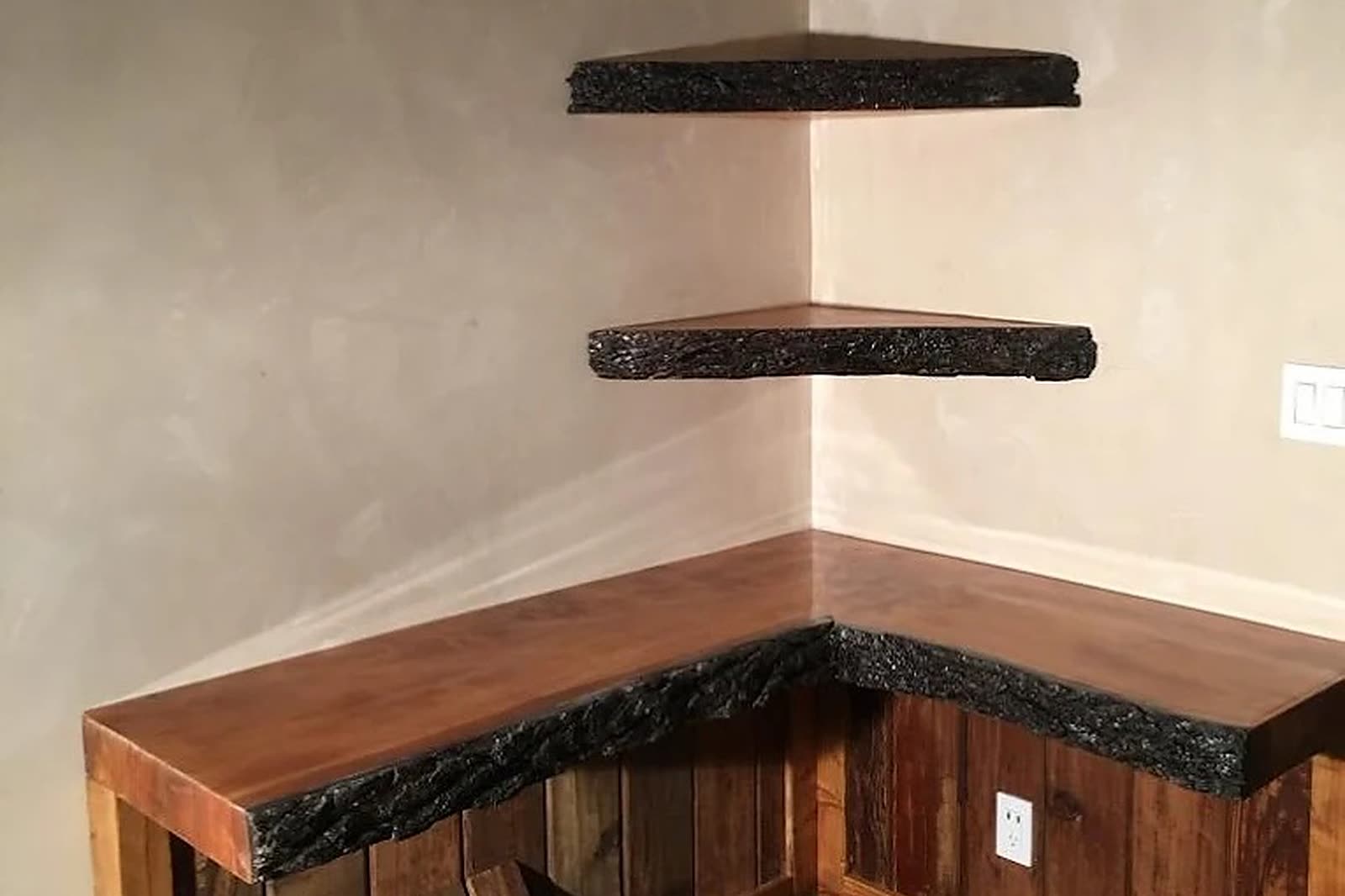
The discipline with walnut is restraint. Our matte-black and walnut kitchen uses it as one book-matched accent wall against quiet painted cabinetry, and the live-edge walnut shelves let three boards carry a whole room. Walnut everywhere stops reading as special. Walnut in one deliberate place never does.
White oak: the modern workhorse
If walnut is the showpiece, white oak is the wood this decade keeps asking for. Rift-cut, its grain runs straight and calm, which suits flat-panel and slab kitchens. Quarter-sawn, it throws the medullary ray fleck that traditional Arts and Crafts work is known for. Same tree, two different kitchens.
Its closed pore structure stands up to a working kitchen, and at 1,360 Janka it is genuinely hard. It takes cerused, wire-brushed, bleached, and natural finishes evenly. Its cooler tone under a clear matte finish is much of what people mean when they say a kitchen looks current.
The cost sits between maple and walnut, with rift-cut commanding more than plain-sawn because it yields less of the log. When a client asks for a wood kitchen with no other constraints, white oak is the answer we reach for first.
Maple: the quiet performer
Maple gets less press than the other three because it does its work quietly. It is the hardest of the four, about 1,450 Janka, close-grained and pale enough that the surface almost disappears. Finished clear it reads clean and Scandinavian. Under paint it is simply the best substrate there is among common hardwoods: the tight grain means the paint lies flat, with no open pores telegraphing through the finish.
That is why most of the painted kitchens we build, including work like the cream shaker pantry, are maple or a maple-and-MDF combination underneath. The wood is not the star of those rooms and is not meant to be. It is the reason the paint still looks right in year fifteen.
It is also the most affordable, which makes it the honest recommendation whenever the design does not specifically call for oak, walnut, or cherry.
Cherry: the wood that deepens
Cherry asks something of its owner: patience. Fresh off the bench it is a pale, salmon-toned wood that looks almost unremarkable. Give it a year of daylight and it deepens into the rich reddish brown that antique furniture is loved for. No stain reproduces that color honestly, because the color is time.
It machines beautifully, sits at roughly 950 Janka, and carries traditional and formal kitchens better than any other domestic species. The one real caution is evenness: a cherry door half-shaded by a standing mixer will darken unevenly around it. Rooms with balanced light treat cherry best.
Cherry has been out of fashion for perhaps fifteen years, which for our clients is often an argument in its favor. It is the choice for people building a kitchen they intend to keep, not one they intend to photograph this year.
The four woods, side by side
| Wood | Grain and tone | Hardness (Janka) | Takes finish | Relative cost | Best for |
|---|---|---|---|---|---|
| Walnut | Deep chocolate, moving figure | ~1,010 | Oil and clear coats, rarely stained | Highest | Islands, feature walls, shelving |
| White oak | Straight and calm rift-cut, flecked quarter-sawn | ~1,360 | Cerused, natural, wire-brushed | High | Modern wood kitchens |
| Maple | Tight, even, pale | ~1,450 | Paint above all, also clear | Moderate | Painted kitchens, clean modern work |
| Cherry | Fine, warms and darkens with light | ~950 | Clear finishes that let it age | High | Traditional and formal kitchens |
Janka numbers measure resistance to denting, and they are worth holding loosely. A cabinet door is not a floor. The difference between 950 and 1,450 shows up in how a wood machines and wears at the edges over decades, not in whether the kitchen survives family life. All four do.
Which wood should your kitchen use?
A short version of the conversation we have at the workshop:
- You want a painted kitchen. Maple, with MDF for wide flat panels. The grain will not show, so buy behavior, not beauty.
- You want wood, modern, and current. Rift-cut white oak under a clear matte finish.
- You want one element to stop people. Walnut, in one deliberate place, with quieter cabinetry around it.
- You want a kitchen that gets better for twenty years. Cherry, and the patience to let it arrive.
- The budget is the constraint. A painted maple perimeter with one real-wood moment beats spreading a thin walnut budget across a whole room.
Where the money actually goes, and how species choice moves a quote, is covered in our Sacramento-area cost guide. For the wider decisions around construction and process, the complete guide to custom kitchen cabinets walks through all of it.
Frequently asked questions
Is walnut too soft for kitchen cabinets?
No. Walnut sits around 1,010 on the Janka hardness scale, softer than oak or maple, but cabinet doors and panels take fingertips, not foot traffic. In forty-one years we have watched walnut kitchens age with grace. The honest caveat is dents: a heavy pot swung into a corner will mark walnut sooner than it marks oak.
Does cherry really change color?
Yes, and anyone who tells you otherwise has not lived with it. Cherry darkens noticeably in its first year as light reaches it, moving from pale salmon toward deep reddish brown. Most people who choose cherry choose it for exactly this. If you want the color you see on day one to stay, cherry is the wrong wood.
Is white oak worth the premium over red oak?
For cabinetry, usually. White oak has a closed pore structure, a straighter figure when rift-cut, and a cooler tone that takes modern finishes well. Red oak is more open-pored and pinker, and it reads as the 1990s to many eyes. It remains a sound, more affordable wood, but white oak is the one the current decade asks for.
Can you mix woods in one kitchen?
Yes, and it is often the smartest way to spend the budget. A painted perimeter with a walnut island is the classic version: paint where the wood would not show, real wood where it will. The mix only fails when the two tones fight each other, which is a design question a good shop resolves on paper before anything is cut.
Planning a kitchen?
If you are weighing custom cabinetry for your own renovation, a short call with the workshop is the calmest way to find out what your room actually needs. No pressure, no obligation.
Book a 30-minute call with the workshopLast updated July 2, 2026 · Premier Cabinets Innovations, Citrus Heights, since 1985